Infatuation Rules
Photo by Anna Shvets Pexels Logo Photo: Anna Shvets

What is the feminine side of a man?

Advertisement: A character who is In Touch With His Feminine Side, also known as a Tomgirl, a Girly Boy, or a Sensitive Guy, is a male character who lacks certain stereotypically male traits and may adopt some stereotypically girlish traits.

Why do most relationships end after 3 years?

Many will not last beyond three years because they already see qualities in each other that they do not find compatible. Others will be stressed...

Read More »
How often should you see someone you're going on dates with?

“Locking in a date a week is a good benchmark to aim for to be sure you're giving enough time to the relationship, without meeting up so little...

Read More »

http://tvtropes.org/pmwiki/pmwiki.php/Main/InTouchWithHisFeminineSide

So feminine, he must've turned into a girl.

Rogelio, Jane the Virgin "Men get pedicures! Or what was all this equal rights talk all about?" A character who is In Touch With His Feminine Side, also known as a Tomgirl, a Girly Boy, or a Sensitive Guy, is a male character who lacks certain stereotypically male traits and may adopt some stereotypically girlish traits. Both genders have their stereotypical roles in society — to prove it, you can read up on them in the Gender Dynamics Index — but society has come a long way, and characters that subvert expected gender roles are on the rise, becoming more accepted and even popular. The Tomboy in Tomboy and Girly Girl might have been ridiculed in the past, but now she is mostly accepted along with her more "feminine" counterpart, at least up to a certain point (there is still a certain point at which tomboys are no longer considered acceptable if they are seen as too masculine). The Sensitive Guy in Sensitive Guy and Manly Man is somewhat arguably less socially acceptable in its extreme forms (Double Standard strikes again, more severely this time, due to most Western societies, particularly the United States, placing greater emphasis on masculinity over femininity) and may subvert gender norms, but characters which embody this trope are no less interesting than any other. There are generally two types of sensitive guys, depending on their degree of femininity vs. masculinity: Tomgirl is fairly feminine, but not overly "feminine" nor overly masculine either. Most of his qualities and interests are feminine, while some of his qualities and interests are masculine as well, and is still easily identifiable as a boy, and some of the clothes he wears are feminine while some of the clothes he wears are what other boys typically wear, and if he's good at sports, he plays sports that are not typically considered "manly," such as golf, tennis, and volleyball. He can be straight, gay, or bisexual, but is usually straight. Girly Boy is very feminine, to the point of actually being "girly," and has lots of feminine interests. He wears makeup and clothes that only girls would typically wear, and is usually not good at sports at all (other than perhaps dance sports). He can be straight, gay, or bisexual, but is usually gay. Between the two types of sensitive guys, the tomgirl is considered somewhat more socially acceptable than the girly boy. Keep in mind that our views of gender have actually changed over time, and some traits which now might be considered masculine or feminine, actually weren't in the past, so this is mostly only valid for modern characters. Also, people are different, and even characters who are unquestionably "manly" might have a few of these traits. Like tomboys, tomgirls aren't necessarily gay, they're split into three types, such as straight, gay, and bisexual. More often than not, however, tomgirls are usually straight. Girly boys, however, more often than not, are usually gay.note Keep in mind that "tomgirl" can also mean "male crossdresser", and in that case, they usually are gay or bi. The outcome of the Sensitive Guy's character arc tends to indicate the intended Aesop. If the Sensitive Guy doesn't "grow out of it," or find his inner masculinity, this suggests that gender and sexuality boundaries are more permeable and that transgressing these boundaries is acceptable. If, on the other hand, a Sensitive Guy is often hard to be normalized in some way, this implies that his feminine appearance or traits are always problematic. Consequently, the feminine traits of his can serve as an exploration of gender and sexuality. Also like when the media, more often than not, usually portrays the type 2 effeminate tomboy as the "better" type of tomboy, they more often than not usually portray the type 1 tomgirl as the "better" type of sensitive guy. In order to qualify, a character must have a large percentage of these traits and/or have their effeminate-ness be remarked on in-universe. Keep in mind that the term effeminate can also be used to describe tomboys who are relatively more feminine than other tomboys, at least in terms of appearance and/or personality, even if their interests may still be fairly masculine, but relatively effeminate tomboys typically also have a sizable portion of feminine interests as well. The "Sensitive Guy", "Tomgirl", or "Girly Boy", while not being exactly embraced by males, is very popular with females, possibly for the same reason the Tomboy is popular with males. Girls identify with them more than they might other male characters, and may find them attractive based on shared interests, or find they are a better Audience Surrogate. Japanese slang often calls this character an "Onee"note from "Ane" (姉), since they can have the characteristics of a Cool Big Sis without biologically being one, although it tends to be shared with characters that enter the Camp side of femininity. For the Distaff Counterpart, see Not Like Other Girls, One of the Boys, Butch Lesbian, and The Lad-ette. Often justified in universe with I Have Sisters. For similar tropes regarding ethnicity, see Pretty Fly for a White Guy and The Whitest Black Guy.

How many friends do most adults have?

Those who value their alone time may need fewer friends, and that's OK too. In general, based on 2021 survey data, the average person in America...

Read More »
How soon do people fall in love?

The average time for men to fall in love is 88 days, while those same feelings of true love take women 134 days. Another dating site, Elite...

Read More »

Examples:

open/close all folders

Anime & Manga

Asian Animation

In Noonbory and the Super 7, Totobory, an eightish-year-old boy, has notably more feminine interests than the other male Super Sensors; he likes making flower crowns and gardening. He is also the softest and shyest of the male characters.

Fan Works

Films — Animation

Zootopia has Benjamin Clawhauser, who is the Non-Action Guy at the precinct and a completely non-threatening character. He's also obsessed with a pop singer and openly emotional, has girlish body language such as face cradling, squeals with excitement, gushes over cuteness, and speaks in a soft, expressive tone. Mater from the Cars series is more in touch with his feminine side because he doesn't seem to argue back with McQueen during their fight in Cars 2. Mater also shows no aggression whatsoever in either film. He's like a very sensitive flower that gets genuinely upset and hurt easily. In Turning Red, Tae Young not only likes to wear makeup and paint his nails, but he also has a taste for things related to romance and love. In Mei's fantasy, when Robaire proposes to her, a visibly moved Tae Young is shown touching his chest tenderly and in various poses he makes heart signs with his hands while showing a delicate smile.

Films — Live-Action

Literature

Live-Action TV

Music

The Dropkick Murphys satirize this trope in "Wicked Sensitive Crew": Well, it's all gone to hell now, the wimps have gangs

Pop punk tough guys with neck tattoos?

If you guys are hard, I'd rather be soft

I gotta find me some seriously sensitive dudes!

The Christine Lavin song "Sensitive New Age Guys" is all about this. Who like to talk about their feelings?

(Sensitive New-Age Guys)

Who's into crystal, who's into healing?

(Sensitive New-Age Guys)

Who like to dress like Richard Simmons?

(Sensitive New-Age Guys)

Who are hard to tell from women?

(Sensitive New-Age Guys) Although there is a subversive moment: Who's concerned about your orgasm?

(silence)

(spoken) ...Hey, wait a minute, wait a minute, you guys said you were sensitive?

(Well, Christine...we're sensitive — but we're not *that* sensitive!)

Men Without Hats' "Hey Men" has the lead singer singing "I've got a woman inside." Tears for Fears: In the original 1981 single version of "Suffer the Children ", the verses sung by Curt Smith convey the band's rejection of the "boys don't cry" mentality. Hold him, tell him that you love him Tell him he's allowed to cry, it's alright In "Head over Heels", the verse "It's hard to be a man when there's a gun in your hand" criticizes the idea that a man must engage in violence in order to prove his masculinity. In "I Believe", Roland Orzabal's emotional vulnerability is expressed by how easily he cries. And I believe that if I'm crying while I write these words

Is it absurd, or am I being real?

I believe that if you knew just what these tears were for

They would just pour like every drop of rain At the beginning of the "Everybody Wants to Rule the World " music video, a kid in a cowboy costume (cowboys are an icon of American machismo) points his toy pistols at Smith — a Long-Haired Pretty Boy dressed in pink — who simply ignores the child's "tough guy" posturing as he drives away. This mirrors the group's disdain for toxic masculinity, subtly blaming America's aggressive "cowboy culture" for its role in the Cold War (which is the subject of the song). The verse "Free her" in the feminist anthem "Woman in Chains" has double meaning; it's not just about liberating women from the shackles of patriarchy, but it's also about allowing men to freely express their feminine sides. According to Orzabal (the songwriter) in this interview: So when I sing "Woman in Chains", I'm singing about the oppression of women around the world, but I'm also singing about the repression of the female anima within myself. At the end when I sing, "Free her", I'm also saying, "Free me."

Myths & Religion

In Norse Mythology, Loki is the epitome of an effeminate male — he's a Gender Bending Pretty Boy who has gotten pregnant more than once, and he thrives on pulling off pranks rather than engage in combat. He's the antithesis of what the macho Norse culture considers to be the ideal man.

Video Games

What are 3 examples of trust in a relationship?

Two people sharing a successful relationship will demonstrate trust in a number of ways, including the following ways: Listening and supporting...

Read More »
What does loosely dating mean?

Generally speaking, casual dating describes: something more defined than “friends with benefits” or hookups. connections that involve some degree...

Read More »

Parodied in Super KO Boxing 2. The last opponent in challenge mode, Executioner, looks like a florist while still looking really scary. Hajime from Ensemble Stars! is sweet, gentle, soft-spoken, and sensitive, his interests include tea and herb sachets, and he can often be found doing laundry or other domestic tasks for his other unit mates. However, he doesn't like being called a girl and would prefer to be more cool and manly - in particular, he's not fond of his girlish bob and wanted to get a buzz cut at one point but was talked out of it by his unit mates for clashing too much with their unit's cute theme. There's also Shu, a prissy and elitist fashion designer who has pink hair, wears frilly clothing, and adores Gorgeous Period Dresses and Victorian dolls. The self-proclaimed Cool Big Sis Arashi would also count as this if you don't see them as a straight-up trans girl.

Visual Novels

Danganronpa: Trigger Happy Havoc: The trial of Chapter 2 reveals that Chihiro Fujisaki crossdresses as a girl because as a boy, he was bullied for being small, shy, and gentle, and he hoped that no one would mock those traits in a girl. Unfortunately, this only exacerbated his perception of himself as weak, since he had to lie to escape bullying. He eventually decides to get stronger so he can accept himself as who he was... but that got cut off when he was murdered.

Web Animation

Captain Flowers from Red vs. Blue, the former (and now dead) CO of the blue team and Doc the medic (for both teams). Unless they're being possessed by O'Malley anyway. Donut might also count, but his effeminacy is much more exaggerated and Played for Laughs. Donut might also count, but his effeminacy is much more exaggerated and Played for Laughs. Shishihara: Sota looks feminine and does feminine things such as cooking, sewing etc. However he can still get into fights.

Webcomics

Web Original

Western Animation

Other

Canadian illustrator Elise Gravel created a cute poster called "Boys Can Be " which tells boys that it's okay for them to be "sensitive, caring, quiet, gentle, artsy, dreamers, scared, affectionate, pretty — and don't let anyone tell you otherwise." " which tells boys that it's okay for them to be "sensitive, caring, quiet, gentle, artsy, dreamers, scared, affectionate, pretty — and don't let anyone tell you otherwise." While Tom Hiddleston's interpretation of Loki is in the strictest sense androgynous (so a mix of feminine and masculine traits), one of the actors who portrays Loki at Disneyland — whose appearance is plainly modeled on Hiddleston's youthfulness and sculpted eyebrows in Thor — exaggerates the character's femininity in voice and mannerisms. It's unclear if his employer insisted that he play Loki in an effeminate fashion, or if the actor himself just isn't good at observing/imitating Hiddleston's performance (but even in the case of the latter, his employer still approved of it). It's an unusual example of the owners of the franchise (Disney runs the Marvel Cinematic Universe) depicting their male character as being more "womanly" than he actually is. — whose appearance is plainly modeled on Hiddleston's youthfulness and sculpted eyebrows in Thor — exaggerates the character's femininity in voice and mannerisms. It's unclear if his employer insisted that he play Loki in an effeminate fashion, or if the actor himself just isn't good at observing/imitating Hiddleston's performance (but even in the case of the latter, his employer still approved of it). It's an unusual example of the owners of the franchise (Disney runs the Marvel Cinematic Universe) depicting their male character as being more "womanly" than he actually is. A joke based on this phrase: "If I had a feminine side, I'd be touching it all the time!"

Real Life

What is the 70 30 rule in relationships?

The bottom line? Coan advises every couple to adhere to the 70/30 rule: For the happiest, most harmonious relationship, the pro suggests spending...

Read More »
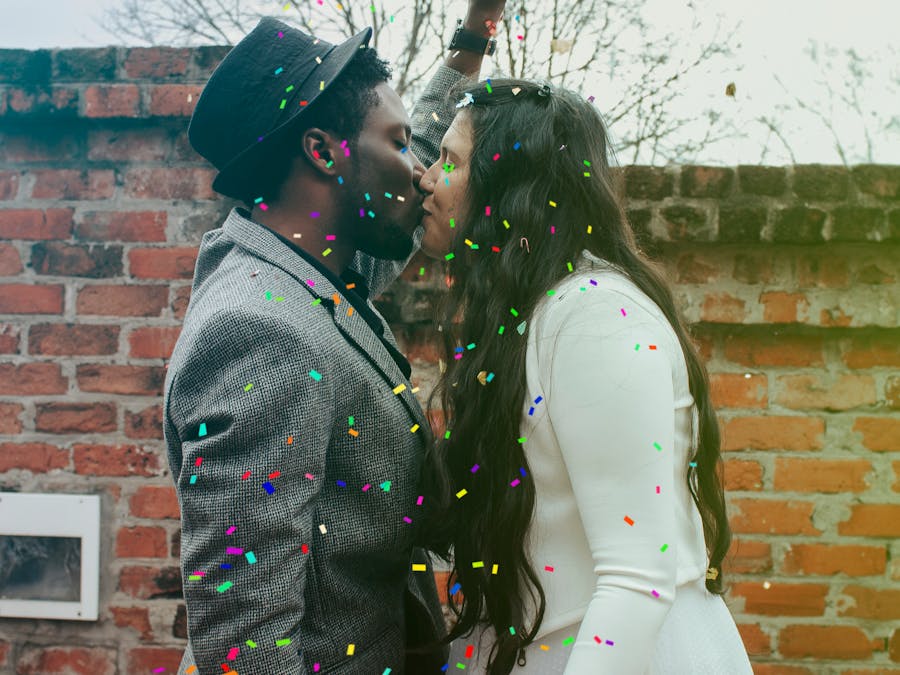
What makes men wanna marry?

Loving someone and feeling safe and fulfilled with them can be an indicator that a committed union, such as marriage, may be in the future....

Read More »
What is a happy marriage like?

What makes a great marriage? In a healthy marriage, a couple is supported by a partner who listens, respects, shares, and practices open and honest...

Read More »
How do men think when they are in love?

Men in love tend to feel extra happy, which is also due to what's going on in the brain. “When a man falls in love, high levels of dopamine — a...

Read More »