 Infatuation Rules
Infatuation Rules
Infatuation Rules

 Photo: Morteza Khobzi
How long does the romantic phase last? Studies have estimated the euphoric stage can last anywhere from six months to two years. Although a small portion of the population (approximately 15% to 30%) say they are still in love and that it still feels like the first six months—even after 10 or 15 years later.

“Partners who are falling out of love often stop making plans for the future,” Manly says. “Whether it's having no interest in planning vacations,...
Read More »
There is no specific number of reports that can get the user banned. In some cases, even one single report is enough to get the user banned, but in...
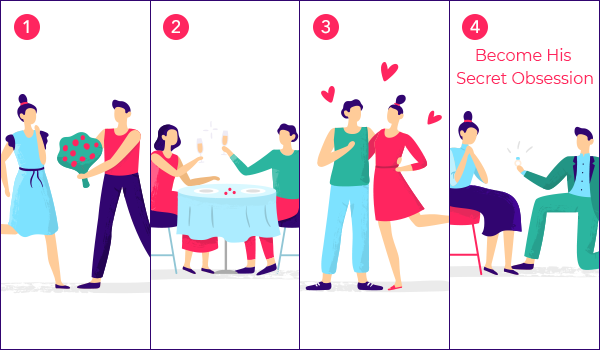
Read More »Falling in love is easy, but relationships can be hard—despite what Hollywood tries to sell us. Like anything else in life worth having, relationships take work. Some couples successfully weather the storms that inevitably arise, while others simply drift apart. When it comes to coupling, there is no instruction manual. Remember that old playground mantra: First comes love, then comes marriage, then comes so and so and a baby carriage? If only it were that simple. While some couples follow this traditional trajectory, many people do not. Fewer couples are getting married, some are having children before marriage, and some are choosing not to have children at all. Every relationship, like every individual, is unique. Regardless of the path one chooses when it comes to romantic relationships—whether it’s down the aisle or across continents—the inherent stages of love and attachment essentially remain the same. A couples' ability to navigate these stages is often the key to their relationship satisfaction. Neuroscientists and “experts in love" have outlined four stages of a relationship. They go from falling in love to living happily ever after (or, at least, for a while). Here are the stages they've found, along with ways to successfully navigate each one. Stages of Relationships by Months You can break these stages down based on when they typically occur. The stages of relationships by months are: Stage 1: The euphoric stage - 6 months to 24 months (2 years) - 6 months to 24 months (2 years) Stage 2: The early attachment stage - 12 months (1 year) to 60 months (5 years) - 12 months (1 year) to 60 months (5 years) Stage 3: The crisis stage - 60 months (5 years) to 84 months (7 years) - 60 months (5 years) to 84 months (7 years) Stage 4: The deep attachment stage - 84 months (7 years) and beyond

Men want to be treated in a way that doesn't diminish their egos or make them feel inadequate. They love to be praised and acknowledged for the...
Read More »
Most of the time no contact with an emotionally unavailable man or woman works because it gives them the space and the time they need to think...
Read More »“In this early stage, many people show a decrease in activity in the prefrontal cortex, which is the part of the brain that has to do with the negative judgment of people.” In other words, the longer a couple can maintain suspension of negative judgment toward each other, the better chances they have of relationship success. When they followed up with participants, the researchers found that the couples who had stayed together for three years or more had the most decreased activity in this part of the brain.

Blame and shame. Aside from all-out abusive behavior, blaming and shaming may be the fastest way to kill your connection. Both behaviors...
Read More »
Studies have shown that men prefer women with longer-than-average legs and a higher leg-length-to-body ratio. Men's interest in women's legs may...
Read More »The third stage is often the make or break point for relationships. What happens at this stage is crucial to what comes next. Brown refers to this as the "seven-year or five-year itch. “Almost every relationship has a drift apart phase,” says Brown. “Either you will keep drifting, or you will come back together. You need a crisis to get through and to be able to talk about it together—you’ve both grown and changed.” For some couples, having children will either solidify the relationship or cause enough stress to make the relationship fall apart. If a couple can overcome a crisis successfully, they will then move on to the next stage: deep attachment.

How to Fall in Love—Even in the Age of Ghosting and Orbiting—According to the Pros Be aware of your headspace. ... Change up your methods for...
Read More »
If a relationship stops bringing joy, and instead consistently makes you feel sad, angry, anxious or “resigned, like you've sold out,” it may be...
Read More »
There are four types of people who narcissists tend to be attracted to, according to Arluck: People who are impressive in some way, either in their...
Read More »
Dating advice: What to do when he stops calling Know that not everyone is compatible. There are myriad reasons someone you're seeing might suddenly...
Read More » Promotion
 Promotion
 Promotion
 Promotion