Infatuation Rules
Photo by Felicity Tai Pexels Logo Photo: Felicity Tai

How can you tell someone is dominant?

A person who expresses non-verbal signals indicating domination may not even be consciously aware of such signals. It may all be expressed as a result of their dominant attitude. ... Facial Expressions Avoiding eye contact. ... Making a prolonged eye contact. ... Making a neutral dismissive face. ... Dominant people smile less often.

What color grabs people's attention?

Red Red is the color of power. It gets people's attention and it holds it, which is why it's the most popular color for marketing. The word SALE is...

Read More »
Can a human sit on a power line?

Power lines are not insulated and you should always avoid contact with them. It is quite possible for people to get electrocuted if you touch power...

Read More »
Body Language of Dominance

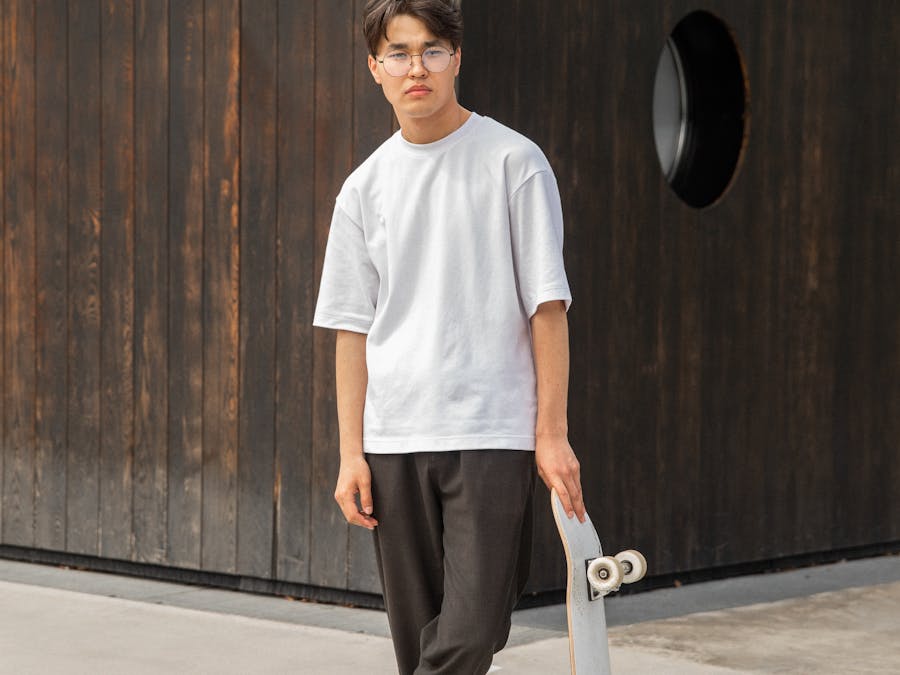
A dominant body language is usually adopted by people who want to show that they are in charge. A person who expresses non-verbal signals indicating domination may not even be consciously aware of such signals. It may all be expressed as a result of their dominant attitude. Alternatively, some people may plan their behaviour carefully so they can give the right signals at the right time; a method particularly common with politicians. In this guide, you will learn about dominant body language signals. You can use such signals to show that you are in charge or alternatively, to learn to sport them when someone uses them on you. Counteracting strategies are also provided at the end of this article so you know what to do when someone tries to dominate you next time.

Looking Larger

Going back to our prehistoric roots, a common and critical way to show dominance is to appear large and powerful. In the animal kingdom, many fights are settled by a simple comparison in size, which saves the parties from engaging in a costly and potentially bloody fight. Modern humans have inherited this behavioural bias to compete with another person. They use the same body language and size signal to show that they are superior or are a big enough threat to be avoided. These size signals can be categorised into the following: Making the body look big. A larger person looks more threatening and is naturally more dominant. Those who have a height advantage can easily benefit from this bias as they are already large and can achieve the effect easily. This is partly responsible for tall people’s success in life, for on average they seem to do better than others. Hence, people tend to use a variety of body language tricks, postures and gestures to appear large. Here are a few examples: Standing upright Placing hands on hips Standing or sitting with legs apart (applicable to men) Holding chin and head up and standing as erect as possible to appear taller A larger person looks more threatening and is naturally more dominant. Those who have a height advantage can easily benefit from this bias as they are already large and can achieve the effect easily. This is partly responsible for tall people’s success in life, for on average they seem to do better than others. Hence, people tend to use a variety of body language tricks, postures and gestures to appear large. Here are a few examples: Standing higher than the other person. Putting yourself in a dominant position that allows you to keep your body higher than the other person gives you a natural advantage. Examples are: Standing while the other person is sitting Standing on a step or platform to get an extra height in comparison with another Standing straight and tall, almost on tiptoes Wearing high heel shoes Wearing a large hat Styling the hair in a way that makes you appear taller (more popular with women) Putting yourself in a dominant position that allows you to keep your body higher than the other person gives you a natural advantage. Examples are: A person who makes herself appear larger aims to appear more powerful, threatening or dominant

Making Territorial Claims

Due to our ancestral heritage and origins, we are strongly territorial. We exhibit many territorial signals which can be used to predict behaviour. Within the context of domination, consider the following powerful body language techniques: Claiming a particular area of an office room, meeting room, exhibition centre or conference room and expecting others to comply with your rules in that area. Invading the other person’s personal space to show dominance. This might even be followed by touch, such as patting the person on the back or holding an arm, indicating ownership of that person. Research shows that when a man touches a woman, it may not be necessarily due to affection; instead it could be an expression of ownership and domination. Invading a particular space that a person has claimed or owns. For example, sitting on the other persons chair, or sitting on the edge of his table are usually signals that indicate domination. These are very popular with power-hungry bosses and managers who think they somehow need to show who is in charge and aim to invade a person’s territory systematically.

How do you know if the break up is serious?

Signs that it's time to part ways You keep breaking up and getting back together. ... You're doing all the sacrificing. ... You can't trust them....

Read More »
What silence does to a man?

The silent treatment puts a man in heightened anticipation. It shows you aren't afraid of little distance or break in a relationship. He doesn't...

Read More »

Touching or holding what other people own. This body language combined with a relaxed attitude usually indicates domination; if I own you, I also own what you own. Examples are picking up a person’s mobile phone, rearranging a desk or picking up their favourite pen. By doing this, the dominant person is saying that “I can take what I want and you cannot do anything about it”. Walking in the centre of a corridor or a pedestrian area and expecting others to get out of the way. The same territorial claim applies to driving especially when in traffic (“Don’t you dare coming into my lane!”). lane!”). Sitting at one end of a long table which is usually associated with power or a superior role. When in a group, a person may stand slightly more central to force everyone to pay attention to them. In this case, this dominant person’s back might be to some people around them, so the person might need to make sure that these people are friends and the person's back is not exposed.

Signals that Indicate Superiority

A person who wants to appear dominant, especially in social contexts, may show a number of direct or indirect power signals. Some of these are carefully planned and some are improvised based on a situation. These signals are usually a combination of verbal statements and non-verbal gestures. Here are some classic techniques:

Showing off dominance with wealth

Wearing expensive cloth, jewellery, watch, make-up and appropriate attire that makes a person appear rich, well-connected and powerful. Showing off belongings indirectly, such as driving an expensive car, using an expensive mobile phone or paying a hefty bill with a relaxed attitude.

Showing off dominance by controlling others

Ordering a member of staff to fetch something for you in front of a person to show that you are in control in this place. Some examples of orders delivered to a member of staff are, “Get me my cigars”, “Bring us some coffee”, “Print the report and bring it to me”, “Call the CFO and tell him to come to the meeting as soon as he can”. The ordering and controlling can also be used in combination with wealth signals. For example, while in a meeting room with a client, the dominant person calls his secretary and says, “I need to go to London; book me an early flight for tomorrow morning. The usual first class, and don’t forget to hire a car with a driver. I cannot be bothered to drive in the horrendous early morning traffic.”

Dominating Time

Much like dominating space, a dominant person aims to control time by setting others to follow his pace. Most often dominant people use their body language to put time pressure on others. A variety of non-verbal and verbal techniques are used:

Interruptions

Interrupting others by arriving late, or leaving early.

Hurrying others

Forcing others to follow a faster pace.

Walking with a wide stride. Larger strides strongly suggest confidence and determination to reach a goal quickly. If walking with someone else, fast walk is also used to set a particular pace and show who is in charge since the slower walker is forced to keep up. Talking fast and expecting others to keep up or to do the same.

Slowing others

Interrupting the other person by asking him to be brief, implying that your time is more precious than his. This technique is also used to break the pace set by the other person and potentially changes the focus of the conversation. This is also sometimes used to counteract a dominant person’s hurried pace.

Facial Expressions

What do you give a man to show you love him?

23 Ways To Show Love To Your Partner Give Him Your Full Attention. Save. ... Do A Little Something Kind For Him Every Day. ... Anticipate His...

Read More »
How long is the average break up?

Although there isn't one rule that fits all, the average break up time for most couples is three months. This is when, psychologists say, most...

Read More »

Dominant people use facial expressions extensively to exercise power. Here are some body language techniques: Avoiding eye contact. By not looking at someone, you could be suggesting that they are not important to be looked at. By not looking at someone, you could be suggesting that they are not important to be looked at. Making a prolonged eye contact. By holding a gaze, you want to show that you mean what you say and that you will not budge. It shows that you are strong-minded, unwilling and potentially uncooperative and dominant. By holding a gaze, you want to show that you mean what you say and that you will not budge. It shows that you are strong-minded, unwilling and potentially uncooperative and dominant. Making a neutral dismissive face. Particularly useful in negotiations, this is the facial expression of a person who doesn’t appear impressed. Holding this expression while the other person is enthusiastically pitching his case can be quite unnerving. This is also used in academic debates when a dominant person, such as a domain expert or a professor, wants to show that he doesn’t think much of other person’s ideas. Particularly useful in negotiations, this is the facial expression of a person who doesn’t appear impressed. Holding this expression while the other person is enthusiastically pitching his case can be quite unnerving. This is also used in academic debates when a dominant person, such as a domain expert or a professor, wants to show that he doesn’t think much of other person’s ideas. Dominant people smile less often. In comparison with submissive people, dominant people smile less often. Of course, smiling less often will also make a person less liked.

Crotch Display (for men only)

This is a power stance shown by standing while the feet are a shoulder width apart and both feet are firmly on the ground. This posture is known as crotch display standing, which is a macho way of highlighting the genitals to indicate superiority. This might be emphasised by “touching” or “adjusting” the area. A similar posture is crotch display sitting which is when a man sits with his legs wide open, again indicating superiority by showing off genitals. This posture is particularly uncommon for women. If used it is usually a signal for sexual invitation though it is also sometimes used to show “that I am as strong as a man” or “we are equals”, mostly used when women are wearing trousers.

A man's way of showing superiority and confidence

Counteracting Dominance

When confronted by a dominant behaviour or body language, you can use a number of non-verbal strategies to derail their dominance: Return their gaze. If someone looks you in the eye for longer than is normal, you can return the gaze by looking back. However, instead of looking at the eyes, look at the centre of the triangle connecting the eyes and the forehead. This allows you to maintain the gaze without getting affected by the other person’s piercing eyes.

What makes a man deeply in love?

Physical attraction, sexual compatibility, empathy, and emotional connection are key to making a man fall in love with a woman.

Read More »
Who gets over a breakup quicker?

There's a reason for this, according to new data from Match's Singles in America survey: Guys just get over breakups faster. Match surveyed more...

Read More »
How do you know relationship is dying?

There's No Emotional Connection One of the key signs your relationship is ending is that you are no longer vulnerable and open with your partner. A...

Read More »
Should you text everyday after 2 dates?

It's not necessary nor a rule to text every day. It's always a good idea to keep a little mystery in between dates as opposed to pouring everything...

Read More »